

 By
By 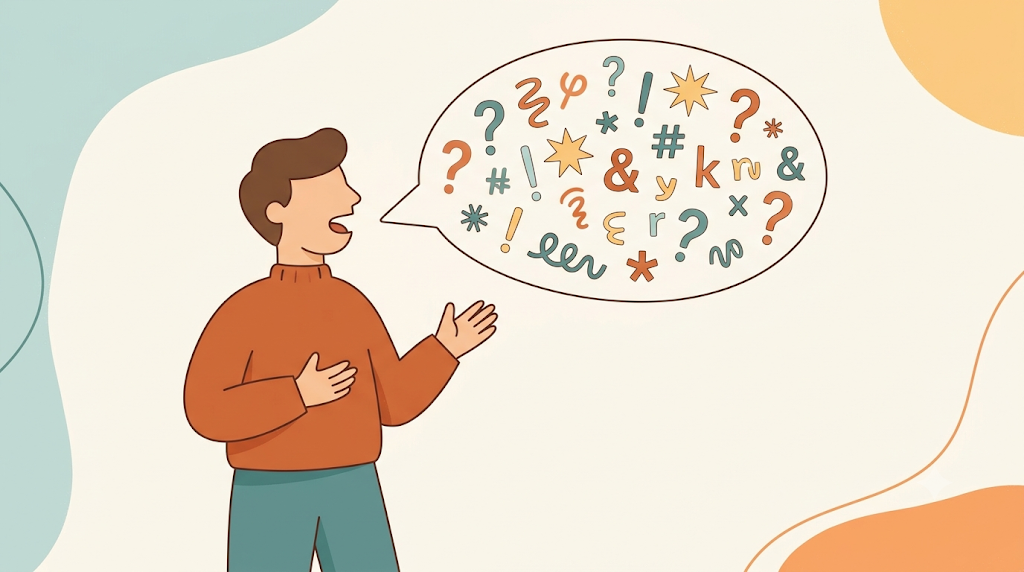
Why AI hallucinates is one of the strangest problems in tech right now, and it starts with a story you’ll instantly recognize.
Imagine you ask your friend a trivia question, and instead of saying “I don’t know,” they just… make up an answer. Confidently. With zero hesitation. And they say it in the exact same tone they’d use if they actually knew the answer.
You’d think something was seriously wrong with that friend.
Now here’s the uncomfortable part: that’s basically what every AI chatbot does, all the time. It’s called hallucination (https://www.ibm.com/topics/ai-hallucinations) , and it’s one of the strangest, most misunderstood problems in AI right now.
Let’s actually understand why this happens, because once you get it, you’ll never trust a confident-sounding AI answer the same way again.
Why AI Hallucinates Prediction Not Memory Diagram
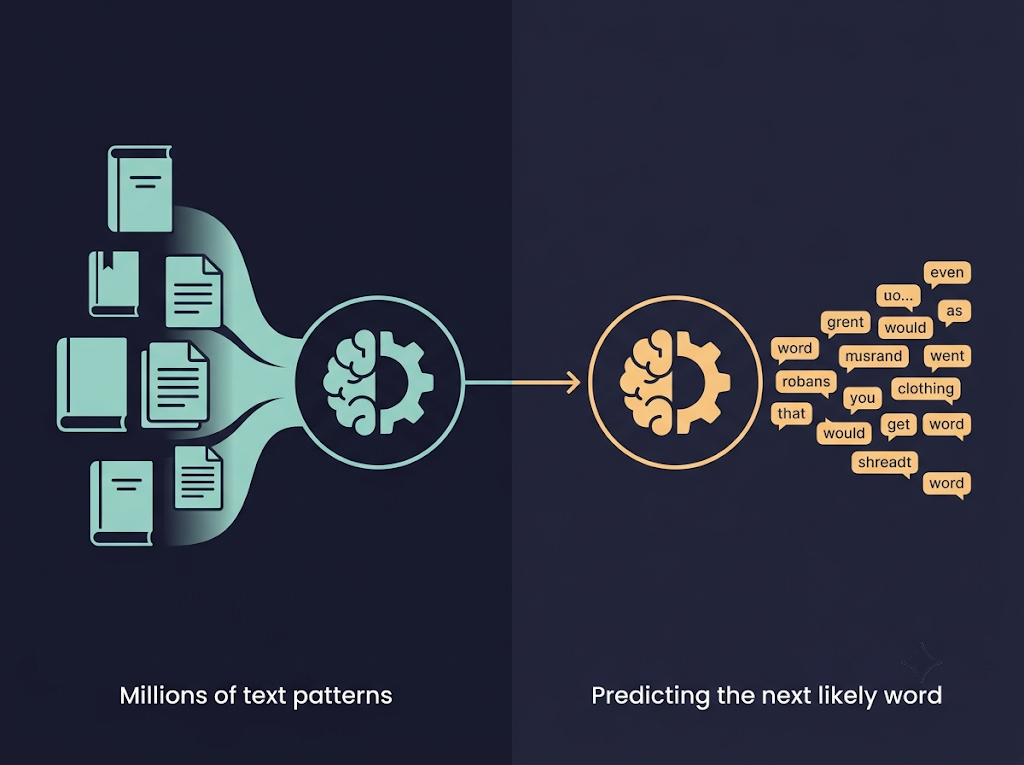
Here’s the sentence that changes everything once it clicks: an AI chatbot was never trained to be right. It was trained to sound right.
This is the entire root of why AI hallucinates, and once it clicks, nothing about a wrong answer will surprise you again.
Read that again, because it’s the whole ballgame.
When an AI model like ChatGPT is being trained, here’s roughly what’s happening:
- It reads a massive pile of text (books, websites, articles)
- It learns to predict “what word probably comes next” in a sentence
- It gets better and better at this prediction game, over billions of examples
Notice what’s missing from that list? Nobody ever taught it what’s true. It was taught what’s likely, based on patterns in the text it saw.
This same prediction process is exactly what powers how machine learning learns in the first place, worth understanding if you
want the fuller picture.
Analogy time: imagine you memorized the rhythm and sound of a thousand history essays, without ever learning actual history. You could probably write a pretty convincing-sounding history essay about literally anything, including events that never happened, because you’re matching the pattern of “how history essays sound,” not recalling actual facts.
That’s an AI chatbot. It’s a world-class pattern matcher wearing a trench coat that says “I know things.”
Why AI Hallucinates Fake Wakanda Example Chat
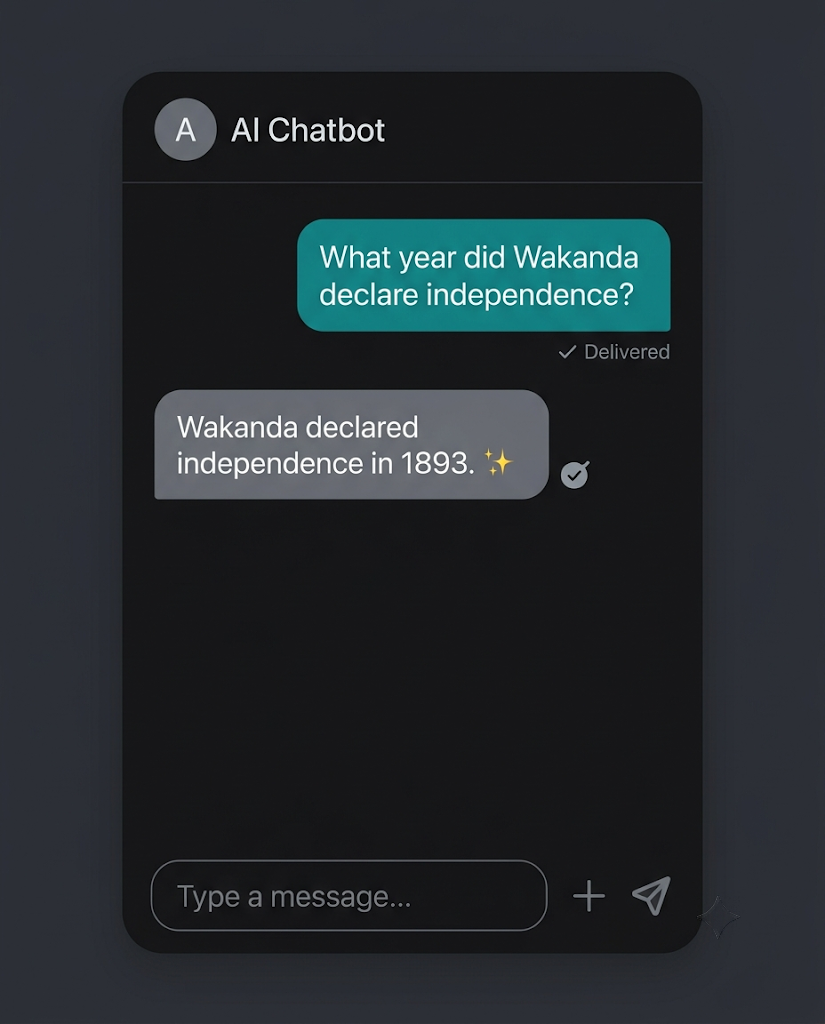
Let’s get concrete about why AI hallucinates, using a real example.
Let’s get concrete. Say you ask an AI: “What year did the fictional city of Wakanda declare independence?”
Wakanda isn’t real. There’s no correct answer. But here’s what the AI’s internal process looks like:
- It scans the patterns it learned from millions of “country declared independence in [year]” sentences
- It notices Wakanda gets talked about like a real African nation in a lot of text (because of the Marvel movies)
- It predicts the next most statistically likely words, based on that pattern
- Out comes something like: “Wakanda declared independence in 1893”
It’s not lying to you. It doesn’t know the difference between lying and telling the truth. It’s just finishing the sentence in the most statistically plausible way, the same way autocomplete on your phone finishes “I’ll be there in…” with “5 minutes” even though it has no idea where you actually are.
| What You Think Is Happening | What’s Actually Happening |
| AI is “recalling” a fact from memory | AI is predicting the next likely word, over and over |
| AI “knows” it’s wrong sometimes | AI has no concept of right or wrong, only likely or unlikely |
| AI is “lying” to sound smart | There’s no intent at all, just pattern completion |
Why AI Hallucinates Guessing Confidently Analogy
Great question, and it exposes the real design flaw.
During training, AI models are rewarded (in a mathematical sense) for producing fluent, confident-sounding, human-like text. They are almost never specifically rewarded for saying “I’m not sure.”
Think about the training data itself. How often, across millions of books and articles, does a confident expert-sounding paragraph include the phrase “I’m honestly not sure about this”? Rarely. Confident writing is what fluent writing looks like, and the model learned to mimic fluent, not honest.
So when the model hits a gap in its knowledge, its instinct (if we can even call it that) is to keep the sentence going in the most fluent, confident way possible. Silence isn’t in its playbook. Neither is doubt.
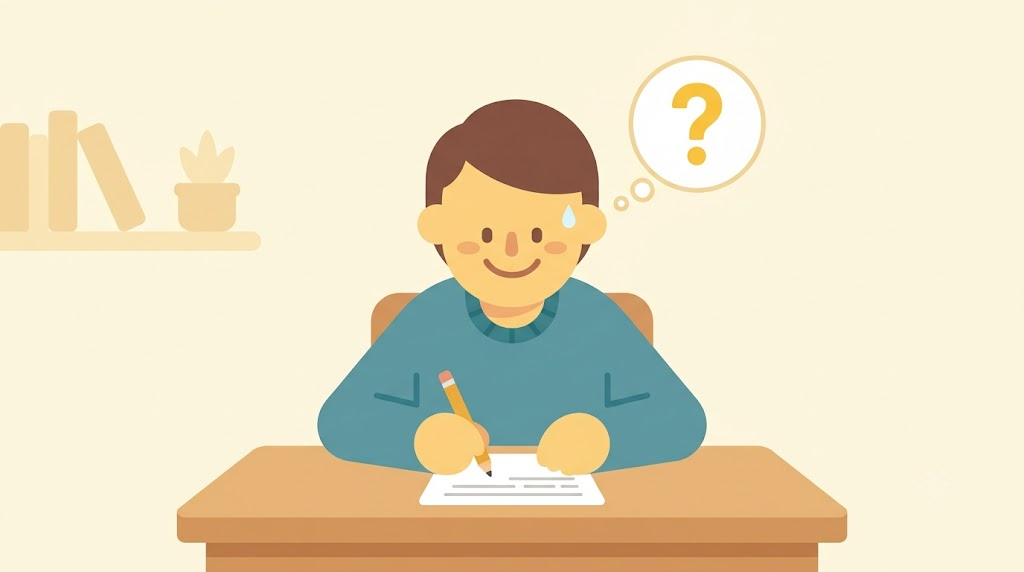
It’s like a student who never learned “I don’t know” is an acceptable answer on a test, so they just write something plausible-sounding and hope for partial credit. Except the AI does this every single time, not just under exam pressure.
This training gap is a huge part of why AI hallucinates instead of simply admitting uncertainty.
Why AI Hallucinates Common vs Obscure Topics
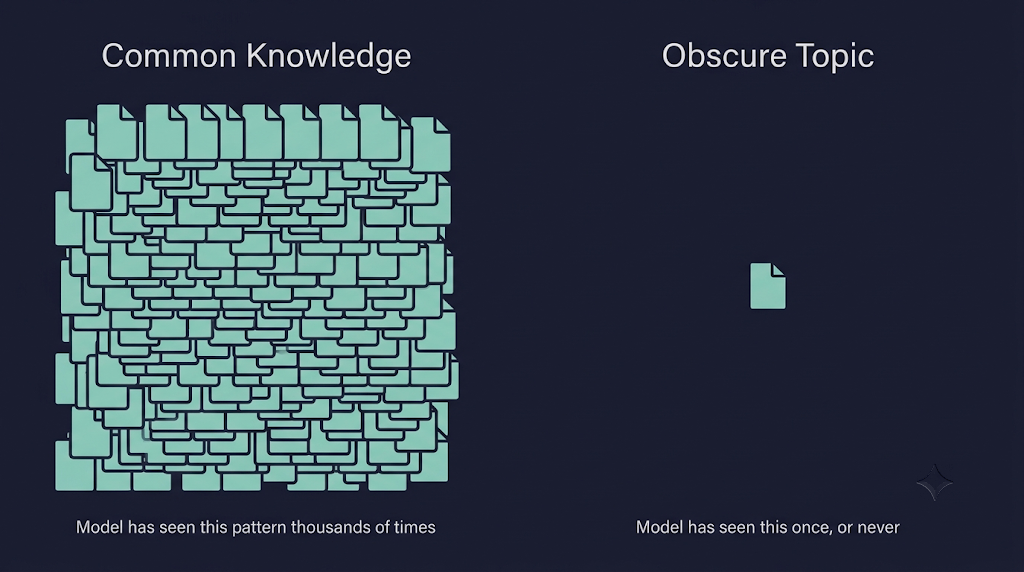
Here’s a pattern you’ve probably noticed: AI is usually great with common knowledge and gets shakier the more obscure or specific your question gets.
That’s not a coincidence. It comes straight from how the pattern-matching works:
- Common topics (capital of France, how photosynthesis works) appear thousands of times in training data, in consistent, agreeing ways. The model has seen this pattern so often it’s basically locked in.
- Obscure topics (a specific court case, a niche academic paper, a small company’s founding date) might appear once, or not at all, in the training data. So the model fills the gap using nearby, similar-sounding patterns instead, essentially guessing based on vibes.
This is exactly why AI is dangerously convincing when you ask it for specific citations, exact statistics, or niche factual details. It’s not more likely to say “I don’t know” just because the question is harder. It’s just as confident either way, because confidence was never tied to accuracy in the first place.
Why AI Hallucinates Even When It “Knows Better”
Companies are actively working on reducing hallucinations (better training methods, fact-checking layers, giving models the ability to search the web instead of guessing). Progress is real. But the underlying issue, a model trained to sound fluent rather than be correct, isn’t going away overnight.
So here’s what actually matters: how you use AI, right now, today.
Why AI Hallucinates 5 tips Avoid Being Fooled
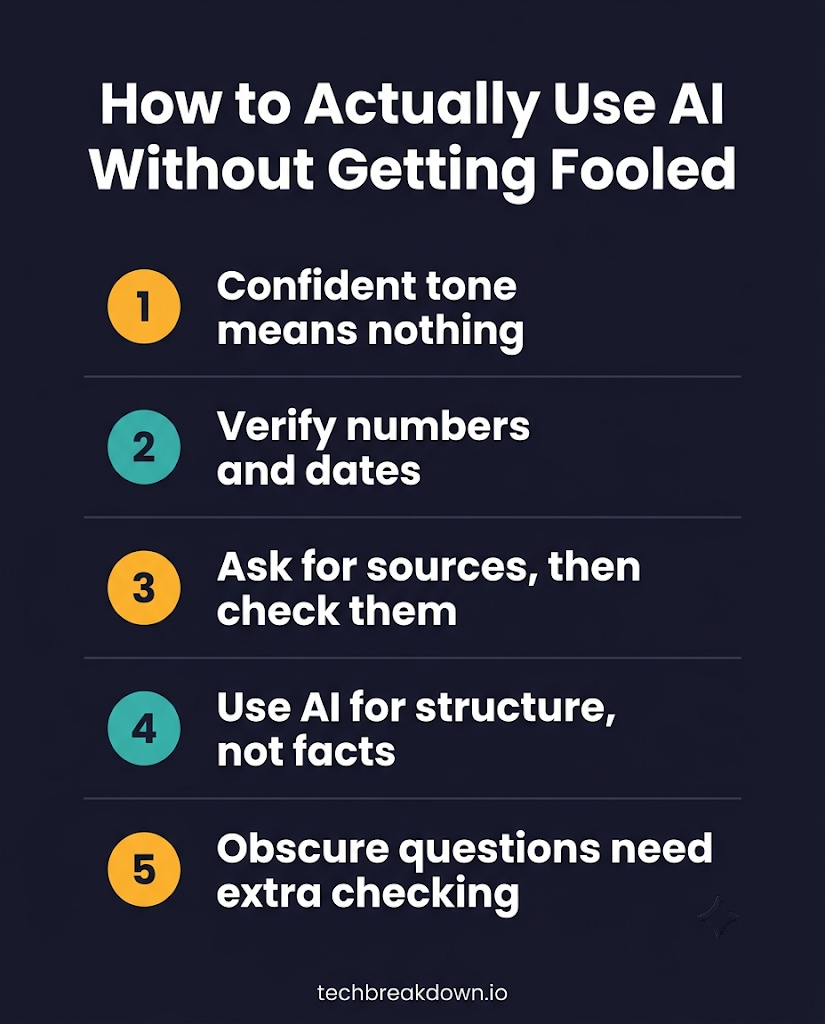
1. Treat the confident tone as meaningless. An AI sounding sure of itself tells you nothing about whether it’s actually right. Confidence and correctness are two completely separate systems in how these models work.
2. Verify anything specific, especially numbers, dates, quotes, and citations. This is exactly where hallucination rates spike. If an AI gives you a statistic or a quote, treat it as “unverified” until you check the original source yourself.
3. Ask it to show its work or cite sources, then actually check those sources. If an AI can’t point you to something real and checkable, be extra skeptical of the claim.
4. Use AI for structure and drafting, not as a factual authority. It’s genuinely excellent at organizing ideas, explaining concepts, brainstorming, and writing. It’s a shaky narrator when it comes to specific facts it might be guessing on.
5. The more obscure your question, the more skeptical you should be. Common knowledge questions are usually safe. Anything niche, recent, or hyper-specific deserves a second check.
Once you understand that an AI chatbot is a fluency machine, not a truth machine, its mistakes stop feeling mysterious. It’s not broken. It’s doing exactly what it was built to do, finishing your sentence in the most convincing way it can, whether or not “convincing” happens to line up with “correct.”